

Posted on September 2, 2026 in Cleaning
A Guide for Management Companies and Residents
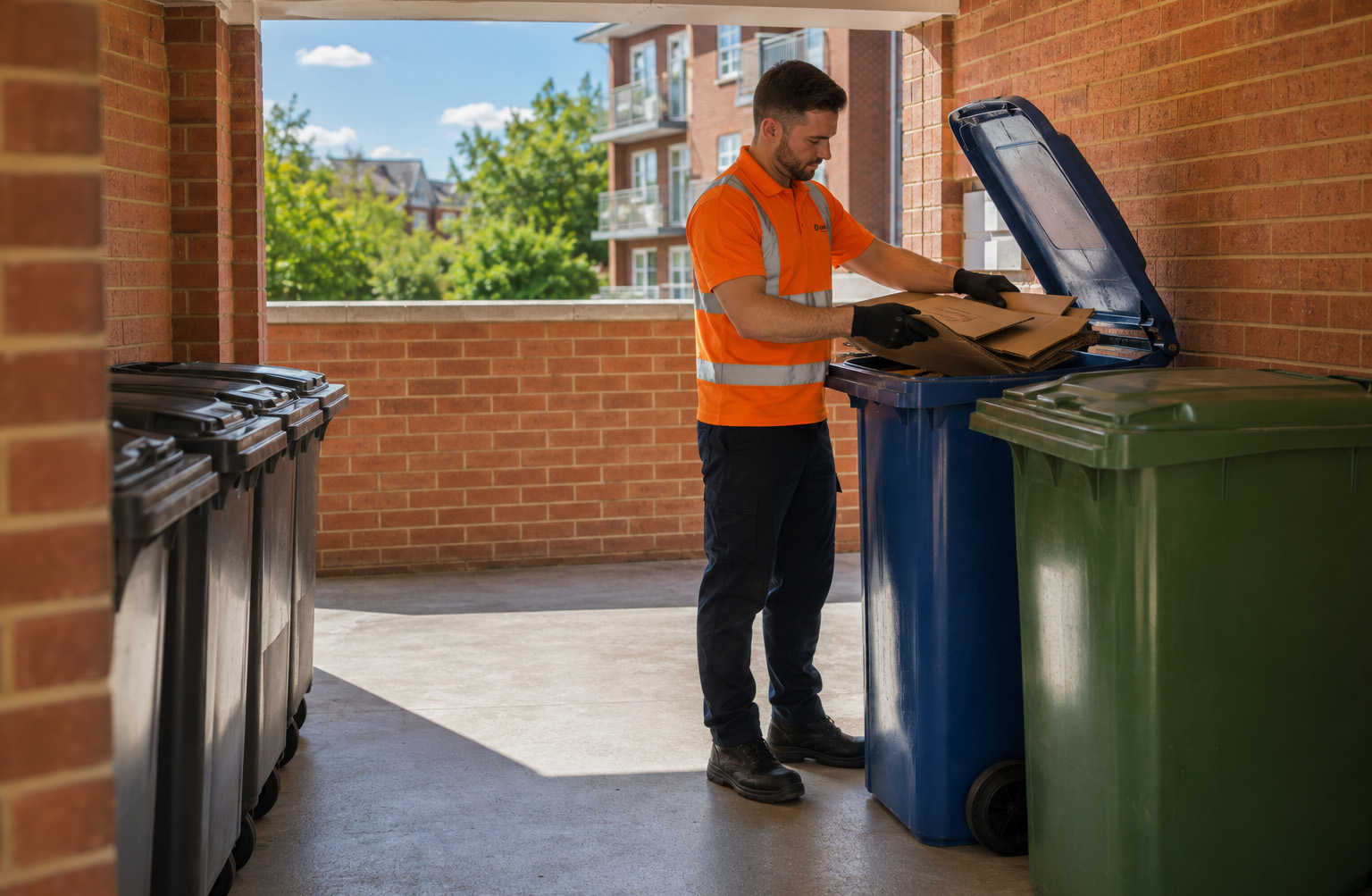
A well-kept bin area says a lot about a property. It’s often one of the first things visitors notice, and when it’s left to become messy or overflowing, it can quickly become a source of complaints, pest problems, and unnecessary costs. The good news is that keeping bin areas clean and tidy doesn’t require a huge amount of effort — it simply requires a bit of planning, clear communication, and consistent upkeep.
At Protech Property Solutions, we work with Property Management Companies across London and the Home Counties, and bin and refuse areas are one of the most common issues we’re asked to help resolve. Here’s our guidance on what both management companies and residents can do to keep these spaces in good order.
Page Contents
Why Bin Areas Matter More Than You Might Think
Bin and refuse storage areas are easy to overlook, but neglecting them can lead to:
- Pest infestations — rats, mice, foxes, and insects are drawn to accessible waste, particularly food waste left in unsecured bags.
- Unpleasant odours — especially in warmer months, poorly managed bin areas can create smells that affect the whole building or estate.
- Health and safety risks — overflowing bins, broken glass, and general clutter can create trip hazards and expose people to bacteria and sharp waste.
- Fire risk — accumulated waste, particularly cardboard and other combustible materials, is a genuine fire hazard if left unmanaged.
- Reduced kerb appeal — a messy bin area can affect the overall impression of a property, which matters for resident satisfaction and for prospective buyers or tenants.
What Management Companies Can Do
1. Provide Clear Signage
Simple, clear signage explaining what goes in which bin, and where communal versus recycling bins are located, removes a lot of the guesswork for residents. Multilingual signage or the use of clear icons can be especially helpful in mixed-occupancy buildings.
2. Ensure Adequate Bin Capacity
One of the most common causes of overflowing bins is simply not having enough capacity for the number of residents. Reviewing bin numbers and collection frequency periodically — particularly after any increase in occupancy — helps prevent waste from building up between collections.
3. Schedule Regular Cleaning and Pressure Washing
Bin areas benefit from regular cleaning, not just clearing away rubbish. Pressure washing floors, wiping down bin stores, and treating for pests on a scheduled basis helps prevent the build-up of grime, staining, and odours over time.
4. Arrange Reliable Waste Collection
Working with a dependable waste contractor and keeping on top of collection schedules is essential. If bins are regularly full before collection day, it’s worth reviewing whether the current schedule still matches demand.
5. Secure the Area Where Appropriate
Lockable or gated bin stores can help prevent flytipping and unauthorised dumping by non-residents, while still being accessible to those who need to use them.
6. Communicate with Residents
A short, friendly reminder — whether through a notice board, newsletter, or residents’ portal — about correct waste disposal and recycling can make a real difference. Most issues stem from a lack of awareness rather than a lack of care.
What Residents Can Do
1. Bag Waste Properly
Loose waste is far more likely to attract pests and cause mess. Bagging and tying rubbish securely before disposal helps keep bin areas hygienic.
2. Break Down Cardboard and Bulky Items
Flattening boxes and breaking down packaging means bins and recycling containers can hold more, and it prevents overflow.
3. Use the Correct Bins
Taking a moment to check which bin is for general waste, recycling, or food waste helps keep the system working as intended and avoids contamination of recycling loads.
4. Don’t Leave Items Beside the Bins
If a bin is full, it can be tempting to simply leave a bag on the ground next to it — but this is exactly what attracts pests and creates mess. Where possible, residents should hold onto waste until there’s space, or report the issue to the management company.
5. Dispose of Bulky or Hazardous Items Responsibly
Furniture, electricals, paint, and other bulky or hazardous items usually can’t go in standard bins. Most local councils offer bulky waste collection services, and residents should be encouraged to use these rather than leaving items in communal areas.
6. Report Problems Promptly
If bins are consistently full, damaged, or being misused, letting the management company or managing agent know quickly allows the issue to be addressed before it escalates.
A Shared Responsibility
Keeping bin areas clean and tidy works best as a partnership between management companies and residents. Clear systems, signage, and reliable collections from the management side, combined with a bit of care and consideration from residents, go a long way towards maintaining a pleasant, hygienic, and well-presented property.
How Protech Property Solutions Can Help
With over forty years of experience supporting Property Management Companies across London and the Home Counties, Protech Property Solutions offers tailored cleaning and maintenance services, including regular bin area cleaning, pressure washing, and waste management support. We understand that every property is different, and we work with you to develop a solution that fits your site’s specific needs.
To find out more about how we can help keep your bin and refuse areas in top condition, get in touch with our team today.
Protech Property Solutions Tel: 01707 644 601 Email: info@protechpropertysolutions.co.uk Website: www.protechpropertysolutions.co.uk
Categories
- Building Maintenance
- Cleaning
- Electrical
- Gardening
- General Info
- Our Service
- Pest
- Security
- Uncategorized
- Waste Solutions
Archive
- September 2026
- August 2026
- July 2026
- April 2026
- February 2026
- January 2026
- November 2025
- October 2025
- September 2025
- July 2025
- June 2025
- May 2025
- April 2025
- March 2025
- February 2025
- January 2025
- December 2024
- November 2024
- October 2024
- September 2024
- August 2024
- July 2024
- June 2024
- May 2024
- April 2024
- March 2024
- February 2024
- January 2024
- December 2023
- November 2023
- August 2023
- April 2023
- February 2023
- January 2023
- December 2022
- November 2022
- October 2022
- September 2022
- August 2022
- July 2022
- June 2022
- May 2022
- April 2022
- March 2022
- February 2022
- January 2022
- December 2021
- October 2021
- September 2021
- August 2021
- July 2021
- June 2021
- May 2021
- April 2021
- March 2021
- February 2021
- January 2021
- December 2020
- November 2020
- October 2020
- September 2020
- August 2020
- July 2020
- June 2020
- May 2020
- April 2020
- March 2020
- February 2020
- January 2020
- December 2019
- November 2019
- October 2019
- September 2019
- August 2019
- July 2019
- June 2019
- May 2019
- April 2019
- March 2019
- February 2019
- January 2019
- December 2018
- November 2018
- October 2018
- September 2018
- August 2018
- July 2018
- June 2018
- May 2018
- April 2018
- March 2018
- February 2018
- January 2018
- December 2017
- November 2017
- October 2017
- September 2017
- August 2017
- July 2017
- June 2017
- May 2017
- April 2017
- March 2017
- February 2017
- January 2017
- December 2016
- November 2016
- October 2016
- September 2016
- August 2016
- July 2016
- June 2016
- May 2016
- April 2016
- March 2016
- February 2016
- January 2016
- December 2015
- November 2015
- October 2015
- September 2015
- August 2015
- July 2015
- June 2015
- May 2015
- April 2015
- March 2015
- February 2015
- January 2015
- October 2014
- May 2013
- April 2013
- November 2011
- September 2011
- June 2011
- January 2011
- December 2010
- November 2010