

Posted on January 26, 2026 in Building Maintenance
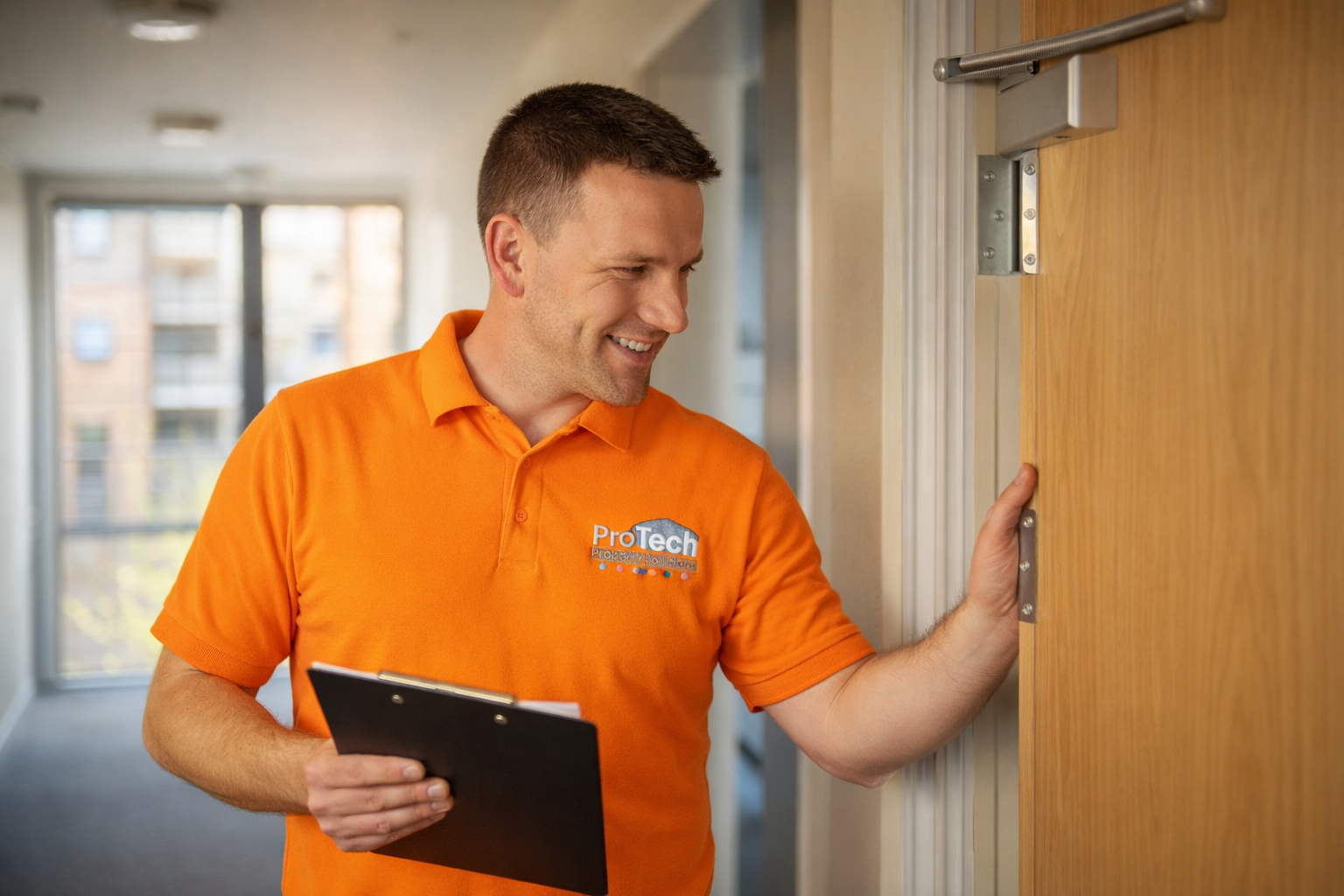
Fire Door Safety in Blocks of Flats – Fire doors are one of the most important life-safety features in a block of flats. When they are correctly installed, maintained and kept closed, they can slow the spread of fire and smoke, helping to protect escape routes and giving residents and firefighters valuable time.
At Protech Property Solutions, we support property management companies across London and the Home Counties with practical, professional property care—including services that help you stay on top of fire door safety and maintenance.
Page Contents
Why fire doors matter in a block of flats
In most blocks, the safest route out is via the communal corridors and stairwells. Fire doors are designed to protect these areas by:
-
Restricting the spread of smoke and fire
-
Protecting staircases and escape corridors
-
Helping prevent a small incident becoming a major event
A fire door only does its job when it is in good condition and closes properly.
Fire door responsibilities: what the law expects (England)
Fire safety in the common parts of blocks of flats is covered by the Regulatory Reform (Fire Safety) Order 2005. In simple terms, the “Responsible Person” must take general fire precautions to keep people safe.
In addition, the Fire Safety Act 2021 clarified that, for multi-occupied residential buildings, fire risk assessments must consider the building’s structure, external walls, and flat entrance doors that open onto common parts.
Regulation 10: specific fire door checks for taller buildings
For multi-occupied residential buildings in England over 11 metres, the Fire Safety (England) Regulations 2022 introduced specific requirements for routine fire door checks:
-
Communal fire doors: checked at least every 3 months
-
Flat entrance doors (leading onto communal areas): checked at least every 12 months, using best endeavours to gain access
-
Record keeping: you should keep a record of the steps taken, including where access was not granted
These checks are not paperwork exercises—they are practical inspections aimed at identifying faults that could stop a fire door from performing correctly.
What a good fire door check looks for
A clear, consistent inspection process typically includes checking that:
-
The door closes fully into the frame (without sticking)
-
The self-closing device works effectively (and hasn’t been removed or disabled)
-
Seals (intumescent/smoke seals) are present and intact
-
Hinges, handles, latches and any glazing are secure and undamaged
-
There are no obvious gaps, warping, damage, or unauthorised alterations that may affect performance
If a door does not close properly, is damaged, or has missing components, it may not provide the protection it was designed for.
Common issues we see in communal areas
Many fire door problems in residential blocks are avoidable. Common examples include:
1) Fire doors obstructed by waste or stored items
Leaving rubbish bags, bulky items or furniture near doors and escape routes can obstruct closing and restrict safe passage.
2) Doors wedged open
Even a short period with a door held open can allow smoke to spread rapidly.
3) Faulty or adjusted door closers
Closers can be damaged, incorrectly adjusted, or removed.
4) Wear and tear that goes unreported
Seals can become loose, hinges can wear, and frames can be damaged over time.
A simple routine check programme helps catch issues early—before they become urgent problems.
Working with residents: a simple message that helps everyone
Fire door safety is a shared responsibility. Residents can make a big difference by:
-
Keeping fire doors shut
-
Never wedging doors open
-
Reporting damage, missing seals, or faulty closers quickly
-
Allowing access when annual flat-door checks are requested (where required)
Clear communication and respectful access arrangements are often the key to smooth compliance.
How Protech Property Solutions can support your block
We work with property management companies to deliver reliable support services that help maintain safe, presentable communal spaces. For fire door safety, we can support by:
-
Helping you plan and maintain a programme of routine fire door checks (aligned to your building type and obligations)
-
Providing clear reporting with priorities and recommended actions
-
Carrying out maintenance support for communal areas, helping address issues promptly
-
Working in a professional, resident-aware way to reduce disruption
We have been established for over forty years, and we pride ourselves on quality service, client focus, and value for money—delivering dependable property care across London and the Home Counties.
Watch our short video: Fire Door Safety in Blocks of Flats
This short guide explains the essentials in under three minutes and is ideal to share with building managers, site staff, and residents.
Important note (compliance)
This article is general guidance for England and is not legal advice. Fire safety duties vary depending on the building, its height, and the findings of the Fire Risk Assessment. Always follow your FRA and competent professional advice.
Need support?
If you manage a block of flats and want practical help keeping on top of fire door safety and communal area standards:
Protech Property Solutions
Tel: 01707 644 601
Email: info@protechpropertysolutions.co.uk
Website: protechpropertysolutions.co.uk
Categories
- Building Maintenance
- Cleaning
- Electrical
- Gardening
- General Info
- Our Service
- Pest
- Security
- Uncategorized
- Waste Solutions
Archive
- February 2026
- January 2026
- November 2025
- October 2025
- September 2025
- July 2025
- June 2025
- May 2025
- April 2025
- March 2025
- February 2025
- January 2025
- December 2024
- November 2024
- October 2024
- September 2024
- August 2024
- July 2024
- June 2024
- May 2024
- April 2024
- March 2024
- February 2024
- January 2024
- December 2023
- November 2023
- August 2023
- April 2023
- February 2023
- January 2023
- December 2022
- November 2022
- October 2022
- September 2022
- August 2022
- July 2022
- June 2022
- May 2022
- April 2022
- March 2022
- February 2022
- January 2022
- December 2021
- October 2021
- September 2021
- August 2021
- July 2021
- June 2021
- May 2021
- April 2021
- March 2021
- February 2021
- January 2021
- December 2020
- November 2020
- October 2020
- September 2020
- August 2020
- July 2020
- June 2020
- May 2020
- April 2020
- March 2020
- February 2020
- January 2020
- December 2019
- November 2019
- October 2019
- September 2019
- August 2019
- July 2019
- June 2019
- May 2019
- April 2019
- March 2019
- February 2019
- January 2019
- December 2018
- November 2018
- October 2018
- September 2018
- August 2018
- July 2018
- June 2018
- May 2018
- April 2018
- March 2018
- February 2018
- January 2018
- December 2017
- November 2017
- October 2017
- September 2017
- August 2017
- July 2017
- June 2017
- May 2017
- April 2017
- March 2017
- February 2017
- January 2017
- December 2016
- November 2016
- October 2016
- September 2016
- August 2016
- July 2016
- June 2016
- May 2016
- April 2016
- March 2016
- February 2016
- January 2016
- December 2015
- November 2015
- October 2015
- September 2015
- August 2015
- July 2015
- June 2015
- May 2015
- April 2015
- March 2015
- February 2015
- January 2015
- October 2014
- May 2013
- April 2013
- November 2011
- September 2011
- June 2011
- January 2011
- December 2010
- November 2010